THE POLIS AND THE POST-SCARCITY PROBLEM
Ancient Greece as proto-post-AGI
In Greek Athletics and the Genesis of Sport, David Sansone argues that Greek athletic competition was not entertainment in the modern sense but rather a ritualized arena for the demonstration of arete, the Greek ideal of excellence as the fullest realization of human capacity. The athletes competing at Olympia were not performing for spectators but proving, before gods and men, that they possessed a quality that elevated them above the ordinary.
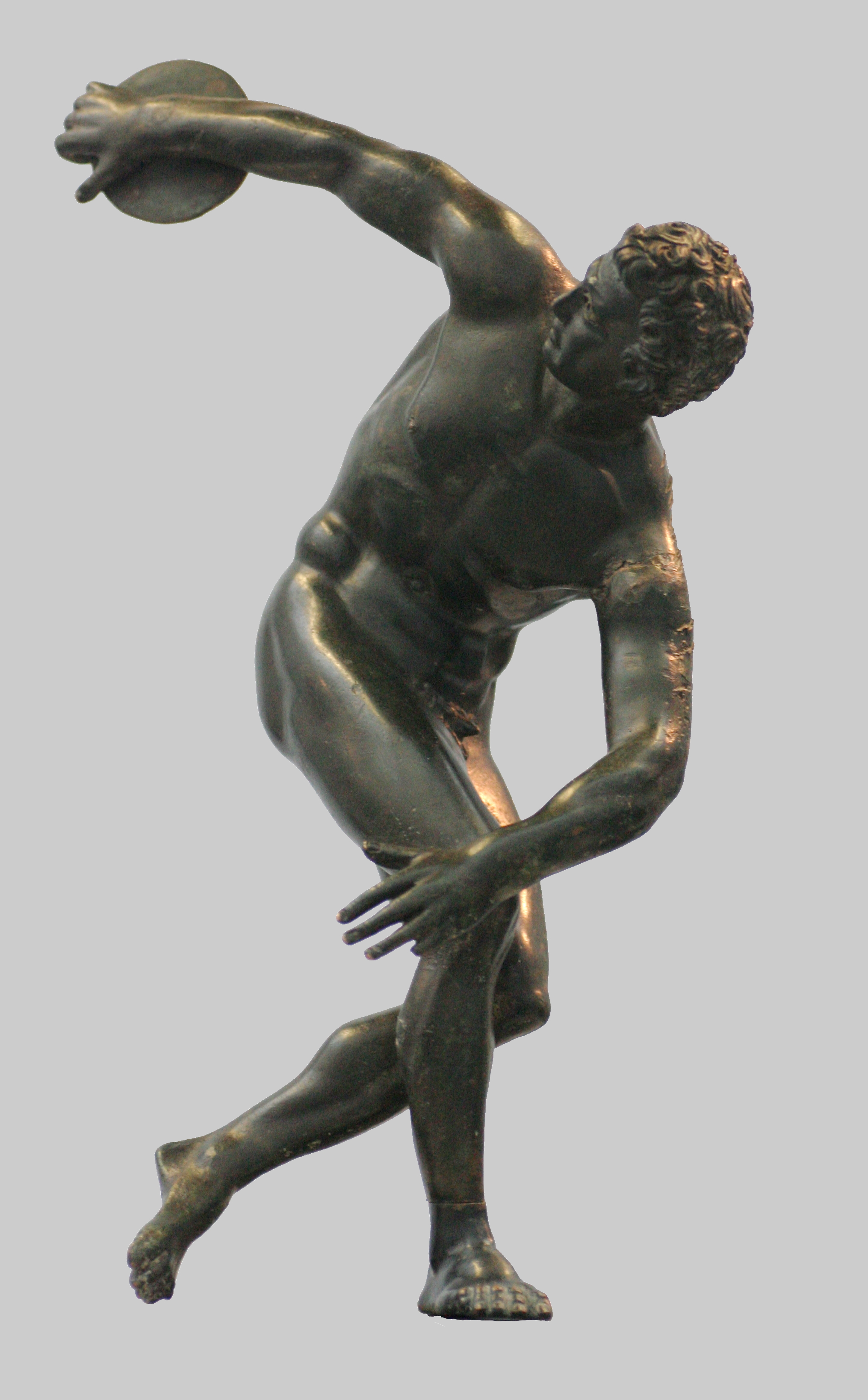
Speculation about a post-AGI world tends to produce two familiar narratives. One imagines utopia, in which humans freed from drudgery finally pursue their deepest passions. The other imagines dystopia, in which humans rendered purposeless by automation slowly wither into passivity. Both narratives, however compelling, miss something the ancient world makes visible. Material abundance does not eliminate the human drive for distinction, and instead, redirects it.
Proto-Post-Scarcity Societies
Greek citizens and Roman patricians existed in what might be called a proto-post-scarcity condition relative to their social position. Their material needs were met through slave labor, tribute, or inherited wealth. The question they confronted was therefore not how to survive but what to do with surplus time, surplus energy, and surplus ambition once survival was assured. Their answer was not leisure in the passive sense but agon, structured contest pursued with extraordinary intensity.
Greek agonistic culture encompassed athletic competition, dramatic contests at the Dionysia, philosophical debate in the agora, and rhetorical performance in the assembly. Rome developed the cursus honorum, a structured sequence of public offices that functioned as a prestige ladder, where each magistracy conferred recognition that could only be surpassed by attaining the office immediately above it. In both civilizations, these competitive frameworks were elaborately structured, deeply serious, and central to civic identity. The citizens of Athens and Rome were not at leisure. They were engaged in relentless striving toward publicly recognized forms of excellence.
The Space of Appearance
Hannah Arendt's analysis of the Greek polis in The Human Condition clarifies why ancient agonistic culture required the particular institutional form it took. For Arendt, the polis was not primarily a geographic territory or a set of political institutions. It was what she termed a space of appearance, a bounded arena within which human action could become visible to others and therefore acquire lasting significance. Without such a space, even extraordinary deeds vanish without trace, witnessed by no one and preserved by nothing.
Ancient Athens had roughly thirty thousand citizens, a scale at which every significant achievement remained interpersonally legible. Everyone knew who prevailed at the Olympic games, who delivered the most compelling oration before the assembly, who commanded the forces at Marathon. Excellence was not an abstraction evaluated through distant metrics but a concrete reality witnessed directly, remembered collectively, and woven into the shared narrative that constituted civic identity. The bounded character of the polis was not a constraint on greatness but a structural precondition for its possibility.
Recognition Without Arena
If these ancient societies furnish any guidance, the central question about a post-AGI world is not whether material needs will be met. Artificial intelligence, by hypothesis, will ensure material abundance. The question is whether a structural equivalent to the polis will exist, a bounded arena within which striving and distinction remain both possible and interpersonally visible.